
Your Reversed Compass MahJong Reading
Each of the sets of tiles below have an influence on the issue represented by The Nucleus. To interpret this reading properly you must relate all the tile sets to The Nucleus.
Scroll down to learn the influence of each Mahjong Tile.
The Western Tiles


The Northern Tiles


The Nucleus

The Southern Tiles


The Eastern Tiles


The Nucleus represents the central issue the reading concerns. When interpreting your reading remember that the four sets of tiles surrounding The Nucleus relate to this issue in some way.
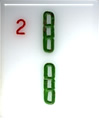
Bamboo 2
Symbol: Duck
The Duck tile symbolizes a long lasting relationship with the strength to overcome all obstacles. It suggests fidelity and trustworthiness as well. Regardless of the type of partnership in question, the 2 Bamboo tile indicates a strong, healthy relationship.
The Western Tiles explore obstacles and solutions to strife caused by The Nucleus.
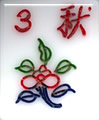
Chrysanthemum
Symbol: Pleasure
The Chrysanthemum tile indicates you will enjoy a happy time filled with social activities and leisurely moments untainted by the demands of everyday life.
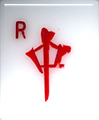
Red Dragon
Symbol: Center
The Red Dragon tile is indicative of success and the fulfillment of your goals.
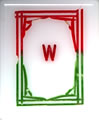
White Dragon
Symbol: The Unknown
The White Dragon tile denotes unknown factors in your reading. Exactly what these factors are is beyond our vision, but they will have an impact on your life.
The Southern Tiles represent current and near-future influences that are affecting The Nucleus.
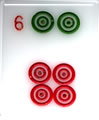
Circles 6
Symbol: Peach
The Peach tile represents the female spirit in its purest form. Where the Peach tile appears it is likely a woman or possibly a young girl will play an important role in outcome of your reading.
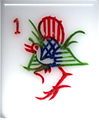
Bamboo 1
Symbol: Peacock
This is the first tile of the first suit in a Mahjong set. Overall, it represents success. However it also warns that success sometimes turns to arrogance, which can lead to loss of everything that has been gained. The Peacock tile also suggests a change in your life path is forthcoming.
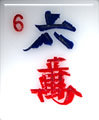
Wan 6
Symbol: Fire
The Fire tile is a strong warning that something is wrong or out of balance. The Fire tile is a warning. Your resources are in jeopardy. These endangered resources may be financial or spiritual or physical. In fact, resources of all types may be in danger.
The Eastern Tiles are a composite of the factors in your personality that are influencing The Nucleus.
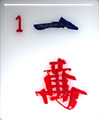
Wan 1
Symbol: Entering
The Entering tile indicates that barriers you now face will soon be lifted. Opportunity and success are ahead, but you must have the courage and energy to take advantage of them.
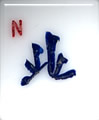
North Wind
Symbol: Water
The North Wind tile indicates there will be difficult moments ahead. These can be canceled out if the South Wind Tile is in your reading as well.
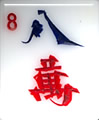
Wan 8
Symbol: Knot
The Knot tile represents both bonding and severing. If the Sword tile (2 Wan) is in your reading then the time to sever ties with someone or something is at hand. Conversely if the Duck tile (2 Bamboo) is in your reading then there is bond that will strengthen. If both or neither appear in your reading, then you have a relationship of some kind that is of undecided value.
The Northern Tiles indicate the outcome of the issue The Nucleus represents.
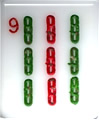
Bamboo 9
Symbol: Willow Tree
The Willow Tree tile represents adaptability and survival in the face of harsh conditions. The Willow bends before the bitter winter winds, but does not break. The Willow tile suggests compromise. You must be willing to give some to get some.
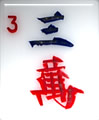
Wan 3
Symbol: Land
The Land tile suggests either a stable setting in which you are already thriving, or one that will exist in the near future. With stability your success and vision will grow.
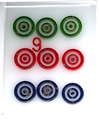
Circles 9
Symbol: Unicorn
The Unicorn tile indicates a clear vision of the future and the ability to see people for who the really are. In rare cases the Unicorn tile may suggest a person with psychic powers.