
Tempest Milky Way
Won best overall and audience choice at 2011 Chronos Film Festival.
One of the challenges in making this video, was trying to get good storm and star shots. The opportunity doesn't come along very often, the storm has to be moving the right speed and the lightning can overexpose the long exposures. I had several opportunities this summer to get storm and star shots. In one instance, within a minute of picking up the camera and dolly, 70mph winds hit. One storm was perfect, it came straight towards the setup, then died right before it reached it.
At the 1:57 mark a Whitetail buck came in to check out the setup. It was caught on 20 frames, and was there for about 10 minutes. It was only 50 yards from the camera, dolly and light.
At the 3:24 mark, a meteor reflects on the water of the small lake, see still below in Photos. There are also quite a few other meteors in the timelapse.
This was all shot in central South Dakota from June-August.
Other Videos That May Interest You:

Ac Tah's Mayan flower Skywalk in Mexico
My first mexican video and experience in Valle de Bravo, Mexico on the Juicy Living Tour on 11-11-11. So happy to be able to share this with you thanks to Pablo Arellano, Mexican film maker and host while I am here in Mexico for the month of November 2011.
Tierney Thys Swims with the Giant Sunfish
Marine biologist Tierney Thys asks us to step into the water to visit the world of the Mola mola, or giant ocean sunfish. Basking, eating jellyfish and getting massages, this behemoth offers clues to life in the open sea.
The Infinite Game: How to Lead in the 21st Century
Simon Sinek joins the How To: Academy to present his latest insights on The Infinite Game. Simon explains how adopting an infinite mindset is necessary for leaders who want to build stronger, more innovative and more inspiring organizations.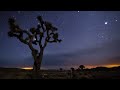
Shawn Reeder Yosemite Range of Light
Yosemite National Park, the High Sierra, and the Eastern Sierra are some of the most beautiful places on earth.
Louie Schwartzberg: Nature. Beauty. Gratitude.
Louie Schwartzberg is an award-winning cinematographer, director, and producer whose notable career spans more than three decades providing breathtaking imagery for feature films, television shows, documentaries and commercials.