
Meditation Articles
Can Gratitude Be a Form of Meditation?
March 30, 2012 | Faye Martins
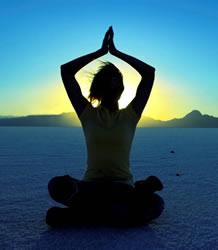
Perhaps meditation is like religion or politics; controversy may sometimes stem from individual interpretation of words rather than major differences in beliefs. People to others with similar backgrounds initially taught all kinds of meditation - regardless of whether it is called mindfulness, centering prayer, Yoga, qigong, or one of many other names -. Many styles have survived for thousands of years, an indication of their universal truth, but the question of whether one is "better" than the other remains.
Some readers, implying that meditation is far more esoteric and mystical, vehemently challenged a blogger's recent claim that simple gratitude can be a form of meditation. Although Buddhist monks have recognized the act as a part of their mindfulness techniques for thousands of years, scientists are now supporting their claims in studies at leading institutions around the world.
In research done by doctors at the University of California and Southern Methodist University, there were three groups of participants. Each group wrote in a diary daily.
• Group I recorded everything that happened.
• Group II recorded only what they perceived as unpleasant events.
• Group III made a list of things for which they were grateful.
Researchers observed the following changes in the group that practiced gratitude.
• They were more alert, optimistic, enthusiastic, and energetic.
• They exercised more regularly.
• They experienced less depression and fewer stress-related concerns.
• They were more apt to go out of their way to help others.
• They came closer to fulfilling their personal goals.
• They were more likely to feel loved.
In 2010, "Clinical Psychology Review" published additional research to support the benefits of appreciation. The findings showed that people who are thankful for the positive aspects of their lives are less likely to suffer from psychological stress and to recover more quickly from trauma and stress. Adolescents also experienced more satisfaction in school after they learned to express gratitude, a simple act that consisted of writing down three to five things in a diary each day.
Author and psychotherapist Richard Carlson once said, "When you're feeling grateful, your mind is clear and therefore you have access to your greatest wisdom and common sense. You see the big picture."
That sounds a lot like the results of meditation; but if it works, does it really matter what we call it?
© Copyright 2011 - Aura Wellness Center - Publications Division
Faye Martins, is a Yoga teacher and a graduate of the Yoga teacher training program at: Aura Wellness Center in, Attleboro, MA. To receive Free Yoga videos, Podcasts, e-Books, reports, and articles about Yoga, please visit: http://www.yoga-teacher-training.org/
The Art of Visualization in Meditation Practice
March 26, 2012 | Paul Jerard
Under ordinary circumstances, visual images start to fade within seconds, but there have been reports of Buddhist Monks having enhanced imagery skills. When three groups of Monks were observed during two different types of meditation and non-meditation, one group showed impressive improvement in the mental capacity to visually rotate a 3-D object and in the ability to recall the object visually. Although there were apparently no long-lasting improvements in overall memory, the study did show that it is possible to access higher levels of visuospatial memory during some types of visual meditation.
Based on metaphysical beliefs made popular in books and movies - such as "The Secret" and "Shakti Gawain's Creative Visualization" - the power to attract whatever one wants in life, lies in being able to use the power of the imagination to create mental images and positive affirmations. This technique has been used successfully for everything from relieving pain to attracting wealth, but it requires ridding the mind of the negative thoughts and worry that undermine success and contribute to health problems and underachievement.
It has been said that, as many as 90% of the complaints that warrant a doctor's visit, could be partially alleviated by creative visualization. All actions - negative and positive - are processed by the mind, and pleasant thoughts relax the body by causing the brain to release endorphins, or natural tranquilizers. It takes practice, but learning to meditate is one of the oldest ways to change one's brain and, consequently, one's life.
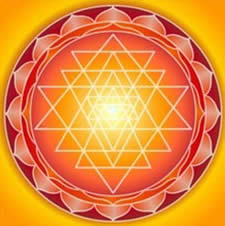
Especially for the visually-oriented practitioner, creating a picture in the mind may be easier than repeating a mantra or phrase. Fortunately, this can be done simply to sitting quietly and gazing at a Yantra, imagining a peaceful place, or by listening to one of the many guided meditations that takes the listener on a quiet journey of visualization. Regardless of the modality, the art of visualizing results in meditation increases human potential and well-being.
© Copyright 2011 - Aura Wellness Center - Publications Division
Paul Jerard, E-RYT 500, has written many books on the subject of Yoga. He is a co-owner and the Director of Yoga Teacher Training at: Aura Wellness Center, in Attleboro, MA. He has been a certified Master Yoga Teacher since 1995. To receive Free Yoga videos, Podcasts, e-Books, reports, and articles about Yoga, please visit: http://www.yoga-teacher-training.org/